Cost of Solar Panels for Home in 2026: Full Price Guide
The cost of solar panels for home in 2026: US medians per watt, Europe and India ranges, and a simple payback after the federal credit.
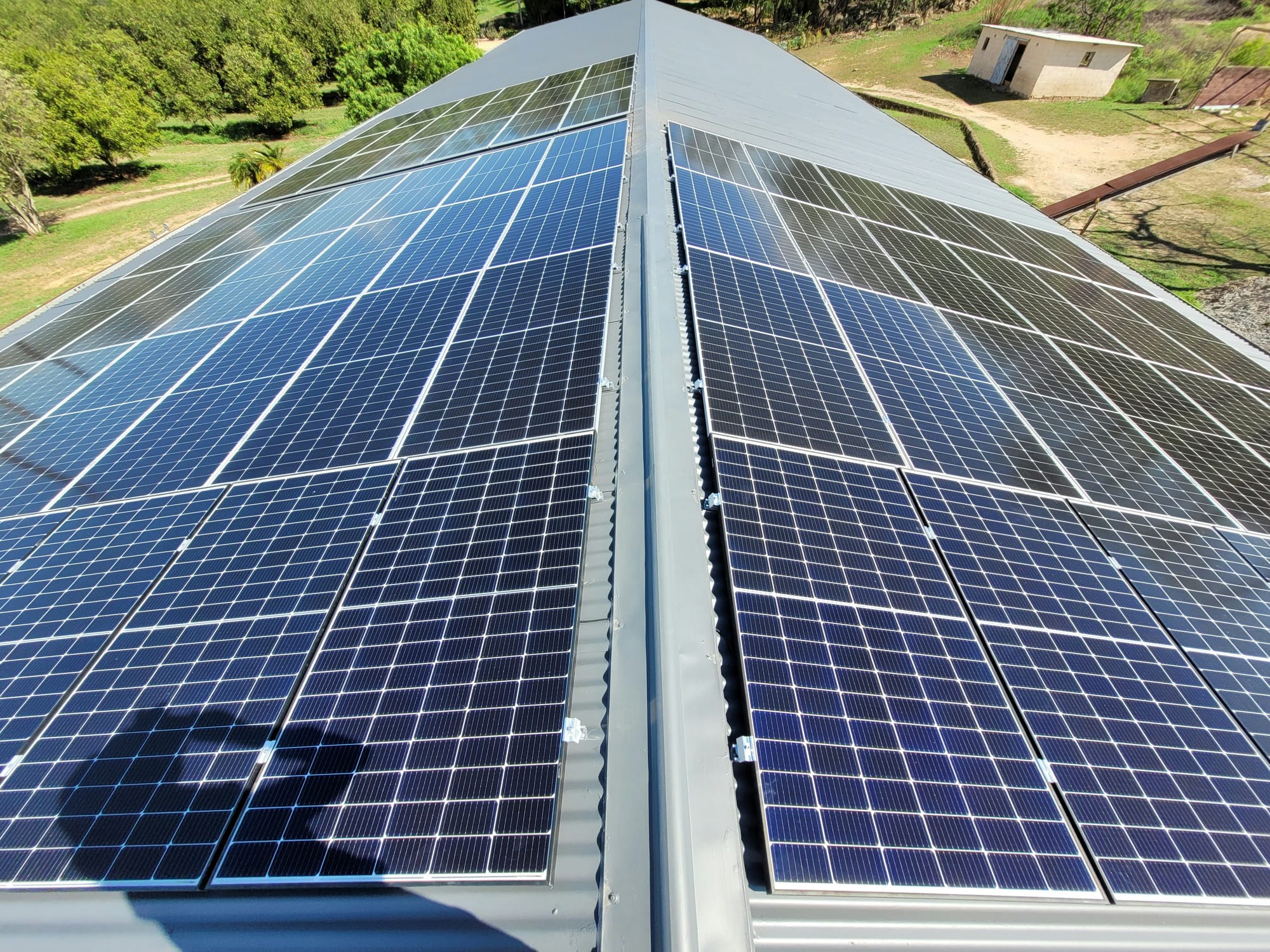
• In the United States, host-owned home solar installed in 2024 had a median price of $4.0 per watt before incentives (Lawrence Berkeley National Laboratory, 2024 dollars). The middle band was about $3.0 to $5.2/W.
• Cash purchases were cheaper than loans in that dataset: $3.5/W versus $4.7/W, partly because some loan fees are rolled into the price.
• The US federal 30% homeowner credit (section 25D) does not apply to spending after 31 December 2025. Do not put it in a 2026 cash quote.
• A power-plant price, such as IRENA's 2024 utility solar cost of $691/kW, is not the price of a roof.
The cost of solar panels for home is the turnkey price: panels, inverter, mounting, wiring, labour, permits and margin, divided by the watts on the roof. In 2026 it depends more on the country, the roof and how you pay than on the brand on the glass. Figures here are published medians or benchmarks. Illustrations are marked.
Cost of solar panels for home: the US median
The best public record of what US households actually paid is Lawrence Berkeley National Laboratory's Tracking the Sun. The 2025 data update looks at systems installed in 2024, in 2024 dollars. For host-owned, stand-alone residential PV (the homeowner owns it, and there is no battery in the price), the median was $4.0 per watt. The 20th percentile was $3.0/W and the 80th percentile was $5.2/W. Half of those systems sat between those two numbers. Small non-residential systems were cheaper, at a $3.2/W median, and large non-residential systems were $2.4/W. Size and simpler sales bring the price per watt down.
How you pay matters as much as the hardware. In the same residential stand-alone set, the median cash price was $3.5/W and the median loan-financed price was $4.7/W. Berkeley Lab says part of that gap is loan fees folded into the upfront price. A low monthly payment can hide a higher system price. Ask for the cash price and the financed price on the same sheet.
A battery is extra. Berkeley Lab reports the median cash price of residential PV paired with storage as $1.7/W higher than stand-alone PV, still measured per watt of solar. On a 6 kW array that difference is about $10,200. It is a statistical gap between two kinds of project, not a shop price for a particular battery. Get a separate line on the quote.
| US residential, 2024 installs | Price | 6 kW example |
|---|---|---|
| Median, host-owned, no battery | $4.0/W | $24,000 |
| Cash median | $3.5/W | $21,000 |
| Loan median | $4.7/W | $28,200 |
| 20th to 80th percentile | $3.0–$5.2/W | $18,000–$31,200 |
These prices are before incentives. They also exclude third-party-owned systems, such as many leases, which Berkeley Lab keeps in a different cut of the data. A 2026 quote in a high-cost city can sit at the top of the band; a simple asphalt roof in a competitive market can sit at the bottom. Three quotes on the same roof are worth more than a national median.
Solar panel cost outside the United States
Solar panel cost for a house is published in a few countries and almost nowhere as a clean national median. Where a number exists, read the fine print: system size, whether a battery is included, and whether the figure is a benchmark used for a subsidy or a price people actually paid.
| Place | What was published | How to read it |
|---|---|---|
| Germany, ~10 kWp roof | €900–1,500 per kWp at the end of 2025 | Fraunhofer ISE Photovoltaics Report (edition noting March 2026). About €9,000–15,000 for 10 kWp, hardware and install, not a battery. |
| Germany, single-family houses | €11,764 average without a battery, second quarter of 2025 | WirtschaftsWoche, from ImmoScout24 / Selfmade Energy, for systems of about 12–25 modules. One quarter, not a law of nature. |
| India, 3 kW benchmark | ₹1.45 lakh benchmark; ₹1.7 lakh used as a market assumption | IEEFA, October 2025, citing MNRE. The ₹1.7 lakh figure is IEEFA's assumption. The central subsidy is separate and cuts what the household pays. |
| Morocco and the UAE, houses | No national median comparable to Berkeley Lab | Do not borrow a power-plant price. Ask two local installers. [CHECK any dirham or MAD-per-watt figure in an advert.] |
| Utility-scale solar, world 2024 | $691/kW installed, LCOE $0.043/kWh | IRENA, new power plants, not roofs. About $0.69/W, several times below a US home. |
India's subsidy is separate from the benchmark. IEEFA's state table is consistent with a central subsidy of ₹78,000 on a 3 kW system. Under their assumptions (₹1.7 lakh system, electricity at ₹7 per kWh), payback is near 30 months with that subsidy and near 54 months without it. Those months are a model. Germany is the European house price we can cite. A German €/kWp figure is not a quote in Casablanca, and IRENA's $691/kW is a power plant. France, Spain and the UAE need their own quotes.
How much do solar panels cost after the US tax credit?
How much do solar panels cost in the US used to start with a 30% line at the bottom. For a system you buy yourself in 2026, take that line off. The residential clean energy credit, section 25D of the tax code, was 30% for qualifying home solar from 2022 through 31 December 2025. The IRS says the credit is not available for expenditures after that date. Form 5695 in later years is about using a credit you already earned, not a new 2026 purchase.
Some leases and power-purchase agreements are owned by a company, not by you. Those projects may still use a commercial credit (section 48E) if they meet the construction and placed-in-service rules. The deadlines are specific and they have already moved once. [CHECK the contract against the current IRS and SEIA notes before you treat a lease payment as "30% off".] State rebates and property-tax exemptions, where they still exist, are separate from 25D. Ask for them as their own lines.
What actually drives the quote
Modules are no longer most of a $4/W American system. Berkeley Lab says recent year-to-year declines have been modest, about $0.1–0.2/W a year, and have come mainly from soft costs: finding the customer, labour, permitting, interconnection, some loan fees, taxes and profit. Two roofs with the same panels can differ because one city inspects in a week and the other in two months. On the roof, the usual extras are a main-panel upgrade, tile, a steep pitch, shade and a long cable run. A battery changes the project, as the $1.7/W gap shows. So does module-level electronics, which Berkeley Lab found on 87% of US residential systems in 2024.
A worked payback for a 2026 US buyer
Use the median, and do not pretend it is your house. A 6 kW system at $4.0/W is $24,000 before any state incentive. Assume, for this illustration only, that the array yields 1,300 kWh per kilowatt per year, a mid-range US figure, not a national measurement. That is 7,800 kWh a year. The US Energy Information Administration's average residential price for 2025 was 17.30 cents per kWh. If every solar kilowatt-hour displaced a kilowatt-hour you would have bought at that price, the bill saving is 7,800 × $0.173 = $1,349 a year.
Simple payback is $24,000 ÷ $1,349 = about 18 years. At the cash median of $3.5/W ($21,000) it is about 16 years. This sum ignores degradation, a future inverter, and exports that are paid below the retail rate. At 30 cents per kWh the same 7,800 kWh would be worth about $2,340 a year, and the $24,000 system would be closer to 10 years. The federal 30%, which used to knock about $7,200 off a $24,000 system, is what made the national-average case look shorter. In 2026 your tariff and your state rules do that work, or they do not.
Real: US homes in 2024 commonly paid a few dollars per watt, not a few tens of cents. Germany has published rooftop bands near €1 per watt for a 10 kWp system. India has a formal benchmark and a central subsidy.
Not your quote: IRENA's $0.69/W utility solar, a module-only wholesale price, or a Facebook price with no roof visit.
Not available for a 2026 homeowner purchase: the federal 30% under section 25D.
Verdict: get three itemised quotes. Compare cash price per watt, what happens to exports, and the warranty party. Then run the payback at your tariff.
Frequently asked questions
How much do solar panels cost for a typical home?
In the US, a 6 kW system at the 2024 median of $4.0/W is $24,000 before incentives, with many real projects between about $18,000 and $31,000. In Germany, Fraunhofer's band for a 10 kWp roof is €9,000–15,000. "Typical" is local.
What is solar panel cost per watt in 2026?
The latest full-year US median we can cite is still the 2024 install year: $4.0/W stand-alone residential, $3.5/W cash, $4.7/W loan. Use a 2026 quote to see whether your city has moved inside the $3.0–$5.2 band.
Do US homeowners still get 30% back?
Not for expenditures after 31 December 2025, under the IRS reading of section 25D. Earlier systems keep the credit they already qualified for. Leases are a different tax rule. [CHECK a lease against current IRS guidance.]
Why is a solar farm so much cheaper per watt?
One design, one grid connection, and megawatts of identical work. A house pays for a crew, a permit and a sales process on a few kilowatts. IRENA's $691/kW is the farm. Berkeley Lab's $4/W is the house.
Does a home battery pay for itself?
Berkeley Lab's paired systems cost more upfront. The battery pays only if your tariff, your outage risk or a low export rate gives it something to do. Run that as its own sum. Our calculators page is built for the solar side of the question.
Are prices in Morocco or the UAE close to Europe?
We did not find a national turnkey median we can stand behind. Utility parks in both countries are large and real. A house quote is a local document. [CHECK it against two installers, and ask what is included.]
Want a first pass on savings? Use our rooftop solar calculator. It is a reference model, not a substitute for the quote or for the US medians in this article. If you are spacing rows on a flat roof or a field, the PV row-spacing tool is the one to open.
Sources
- Lawrence Berkeley National Laboratory: Tracking the Sun
- Berkeley Lab, Distributed Solar and Storage 2025 data update (PDF)
- IRS: Residential Clean Energy Credit
- 26 USC §25D
- SEIA: tax policy
- Fraunhofer ISE: Photovoltaics Report (PDF)
- WirtschaftsWoche: German rooftop system prices, 2025
- IEEFA: residential rooftop solar in India, October 2025 (PDF)
- IRENA: Renewable Power Generation Costs in 2024
- US EIA: electricity prices